How does floating help with sports recovery?
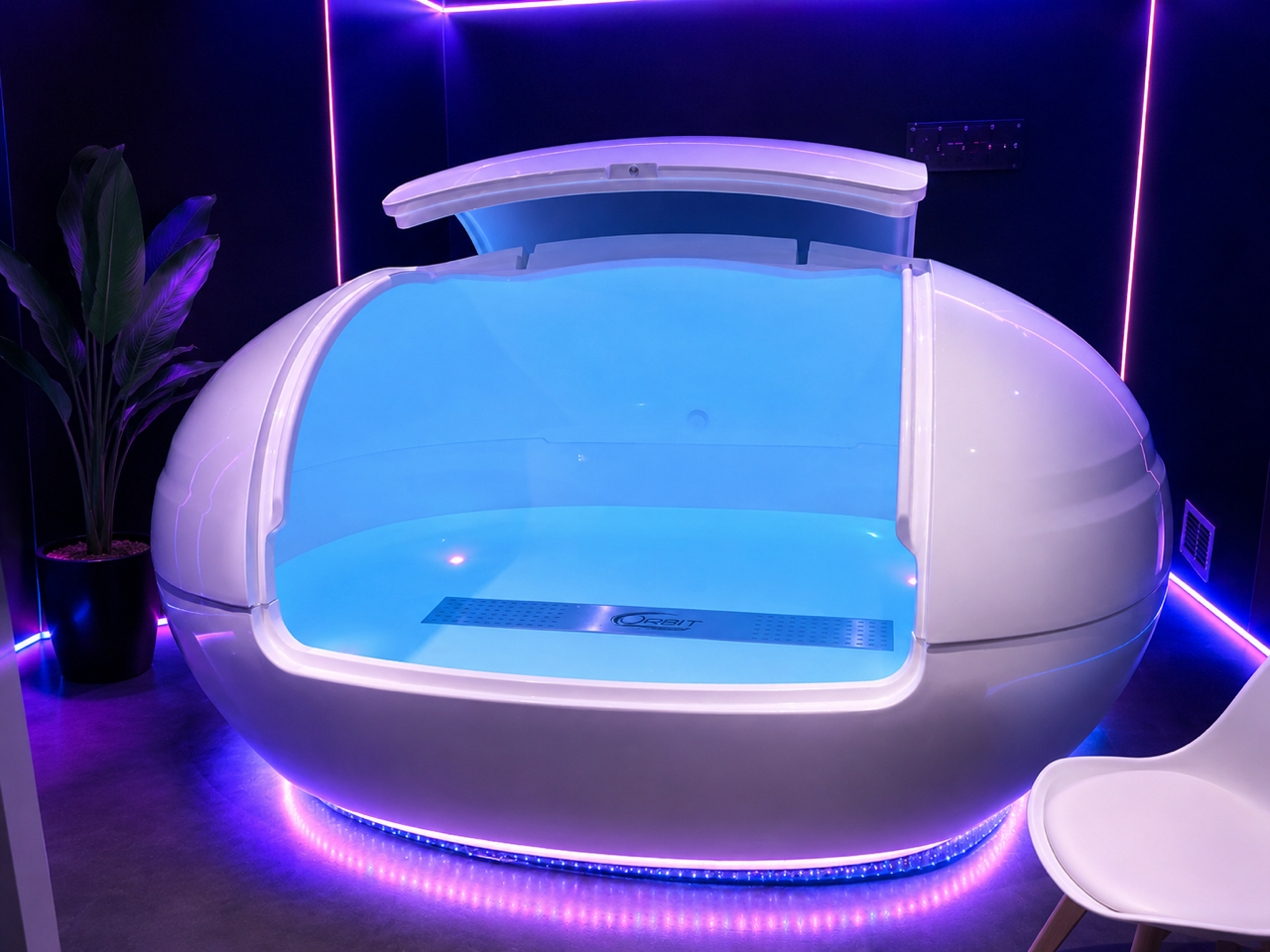
A recovery float combines three things at once: complete unloading of the joints and spine, deep muscular relaxation in skin-temperature water, and a strong parasympathetic (rest-and-digest) shift. Because there is no gravity, no light and no sound to react to, the body spends the full hour in recovery mode rather than splitting attention between recovery and everything else.
Does floating remove lactic acid?
Lactate clears on its own within roughly an hour of finishing training, so no recovery method 'flushes' it out. What floating does do is reduce muscular tension and perceived soreness, and support the relaxation and sleep that actually drive adaptation. We would rather be accurate than oversell it.
Does the Epsom salt really help muscles?
Our pods hold over 500kg of Epsom salt (magnesium sulphate). Magnesium is involved in muscle contraction and relaxation, and many athletes report less cramping and better sleep after regular floats. Evidence on how much magnesium is absorbed through skin is still limited — the strongest, best-supported benefits are the weightlessness, the relaxation response and the sleep that follows.
When should I float — before or after training?
After. A float sits best on a rest day or in the evening following a hard session, when the goal is to switch off and let the body adapt. Floating shortly before a session or competition is not ideal: you will leave deeply relaxed, which is excellent for recovery and unhelpful for explosive output.
How often should athletes float?
Most training athletes float weekly or fortnightly, with an extra session in heavy blocks or the week after a race or match. Even one float in a hard training week makes a noticeable difference to sleep quality and how the legs feel the next day.
Can I float with a soft-tissue injury?
Weightless water is usually very kind to strains and joint irritation, but do not float with any open wound, fresh stitches, recent surgery or an active infection — salt water and broken skin do not mix. If you are mid-rehab, check with your physio and give reception a ring on 01904 501500 if you are unsure.
Is a float the same as an ice bath?
They target different things. Cold water is an acute inflammatory and perceptual intervention; a float is a nervous-system and full-body offload. Plenty of our guests use both — cold water close to training, floats on recovery days.